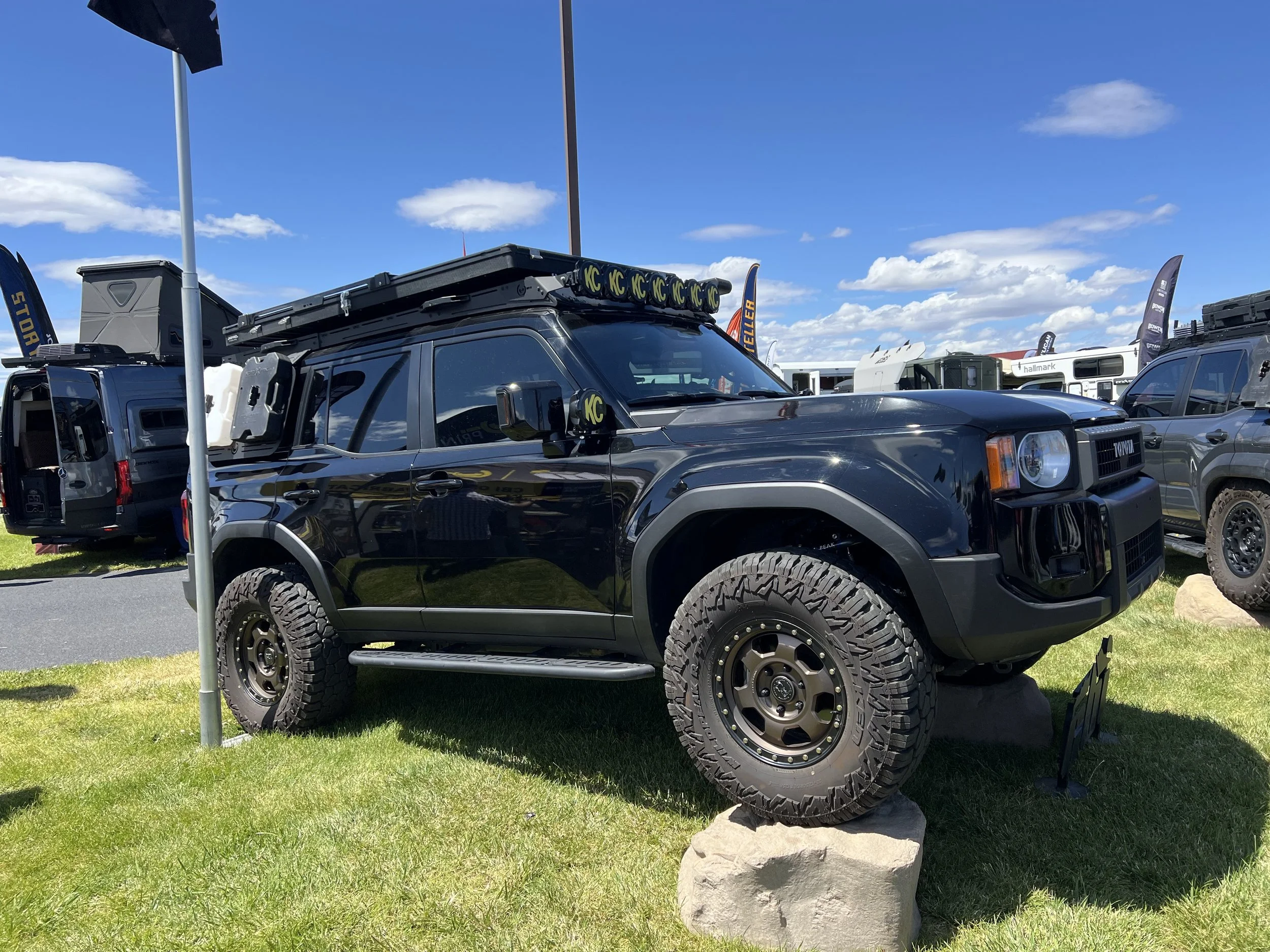
How to Select an Overland Vehicle
Always start with how you plan to use your vehicle: Here is a list of a few critical questions which will help determine the range of vehicles suitable for your needs:
How many people will be traveling in the vehicle?
Is this primarily a weekend travel vehicle with the occasional weeklong camping trip or are you planning an extended trip?
Are you planning to travel primarily in the United States, Canada, and/or Western Europe, or will you explore other parts of the world? If the latter is the case, which regions are you planning to travel to? This will be relevant for spare parts availability and fuel quality (E.g. ULSD for modern diesel engines).
What is most important to you: Off-road capability so you can fit on tight hardcore trails and reach the most remote parts of our planet, or easy highway/country road driving or a comfortable home away from home once you reach your destination?
Establish two lists:
One for mandatory and one for optional features
If you are planning to travel with a family of four then will need four comfortable (and legal) seats and a vehicle from the compact class will not be a suitable choice. If you are planning to visit remote mountainous regions then your vehicle cannot exceed a certain width, height, and weight, and therefore a vehicle from the large class will not suit your needs.
The mandatory list will define which vehicles become candidates for your selection. The optional feature list will help you with your final selection along with your budget and general vehicle availability in your area. And remember, there is nothing wrong with including some features just because you like them as long as the mandatory requirements are met. Ultimately, you also want a vehicle that you enjoy driving!
Reliability and repairability
It’s no secret that a reliable rig is more enjoyable to drive on a long trip than a vehicle which breaks down every few days. This is one reason why the venerable 70 Series Toyota Landcruiser has been an overland favorite for more than three decades, including with mining companies, the United Nations and many other NCOs. Unfortunately, this version of the Landcruiser was never imported into the United States.
However, no matter how reliable your rig is, if the trip is long enough, something will eventually break, and that’s when it matters how repairable your vehicle is in the bush. Let’s take a look at another venerable overland vehicle, the tried and trusted Land Rover Defender which has been around in various forms since the late nineteen forties. In general Defenders are not known for their overall reliability and yet, there are many overlanders around the world who would not drive anything else. While there are several reasons for that, one key reason is that Defenders are very easy to fix on the road, because they are simple and many parts of older models still fit on the newer models. Compare that to a 200 Series Toyota Landcruiser which is considered a very reliable vehicle, but it is also complex and has a lot of electronics. Therefore, when they do break they are harder to fix by the village mechanic in some remote corner of the world.
The first things to change on your new vehicle
Tires:
One of the first items you will probably want to change on your vehicle are the tires. Some type of All-Terrain tire will probably strike the best balance between aggressive enough tread for off-road use, quiet enough for long drives on pavement, and sufficient carrying capacity.
Shock Absorbers:
The next component to consider are the shock absorbers. As the old saying goes in car racing: A car sits on its springs, but rides on its shocks. It is amazing how higher quality and properly tuned shocks can improve ride comfort and handling of a vehicle. That can make a huge difference on long drives, especially on rough roads both on and off pavement.